Sectional and roller doors are the two most popular garage door styles in Sydney, and the right choice comes down to your garage space, budget and the look you want. Here is how they compare on the things that matter.
How each door works
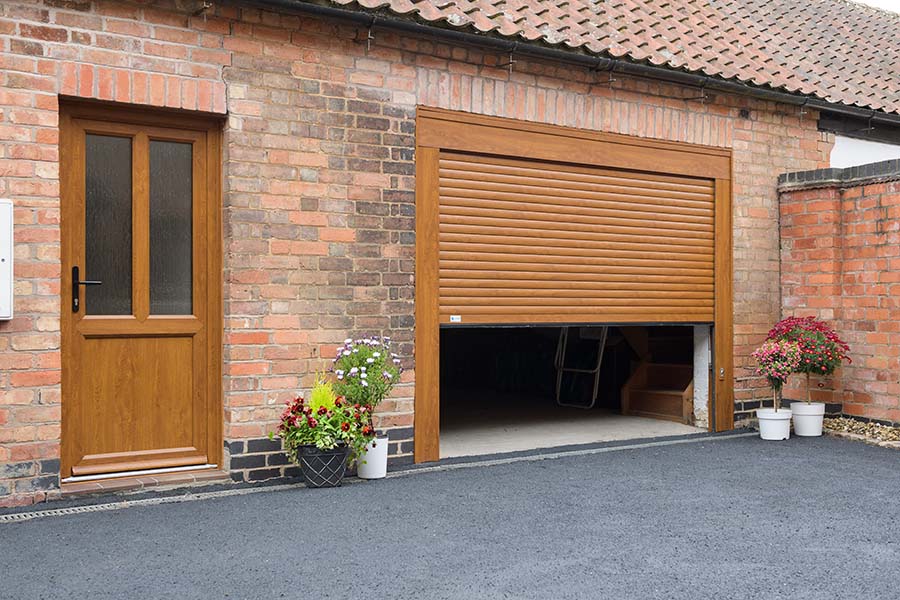
A sectional door is made of hinged horizontal panels that travel up and back along tracks under the garage ceiling. A roller door is a single curtain of corrugated steel that coils around a drum above the opening. That mechanical difference drives almost every other trade-off.
Space requirements
- Sectional: needs ceiling tracks running back into the garage, plus headroom above the opening. Not ideal if you want to keep the ceiling clear for storage racks.
- Roller: everything stays in a compact coil above the opening. The ceiling stays completely free, which is why roller doors dominate in garages with low headroom or storage lofts.
Street appeal
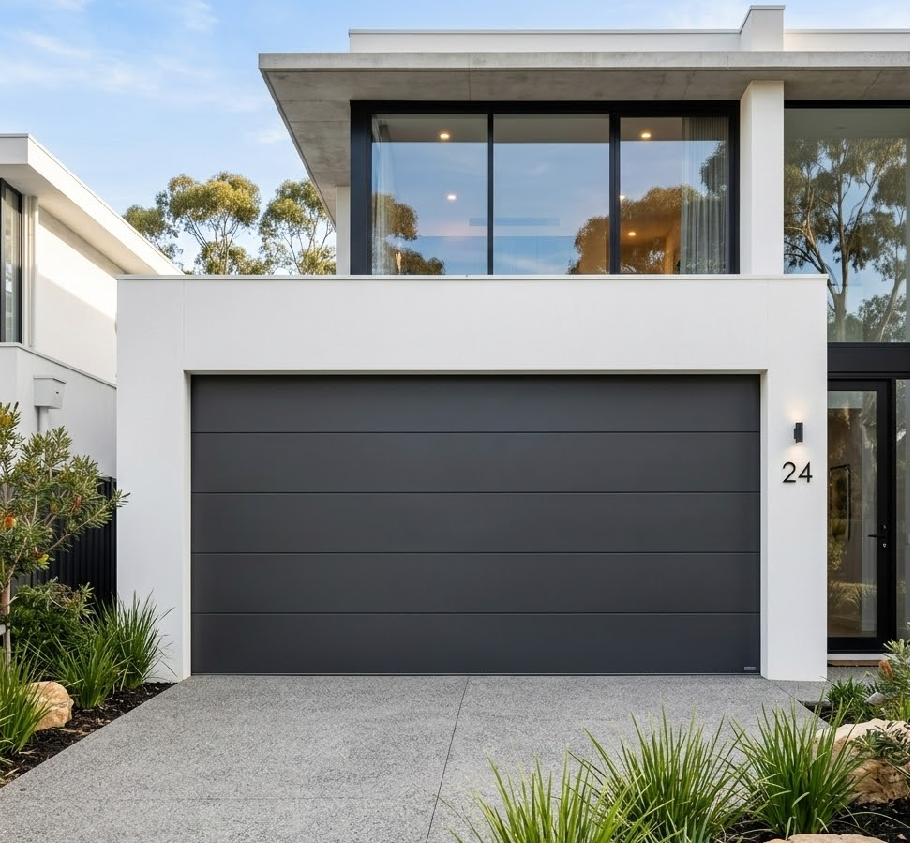
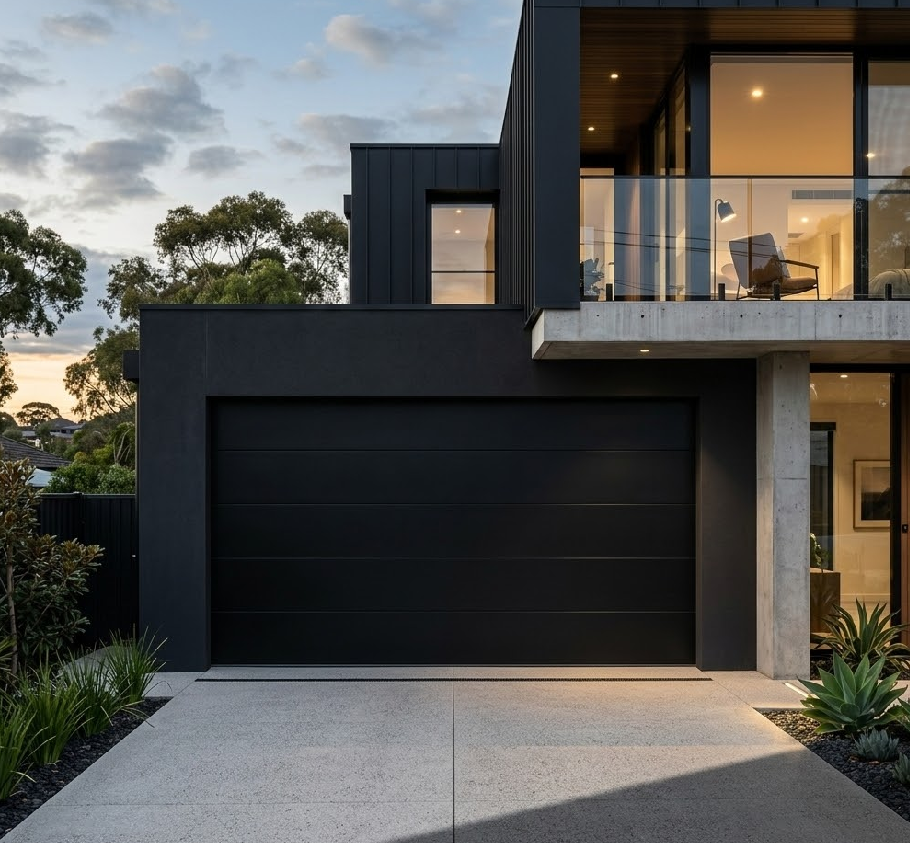
This is where sectional doors win clearly. Panels come in flat, ribbed and embossed profiles, timber-look laminates and any Colorbond colour, so the door can match your facade. A roller door is corrugated steel; neat and tidy, but utilitarian. For front-facing garages on renovated homes, most of our Sydney customers choose sectional. Browse real examples in our gallery.
Insulation and noise
Sectional panels can be ordered insulated, which matters for garages under bedrooms or used as gyms and workshops. Insulated roller doors exist but the coiling design limits how much insulation fits. Sectional doors also tend to run more quietly on nylon rollers, while an older roller door has more metal-on-metal contact.
Price
Roller doors are the budget pick: typically $900 to $2,500 supplied and installed for a standard size, versus $1,800 to $4,500 for sectional. Full pricing detail is in our Sydney garage door cost guide.
Automation and security
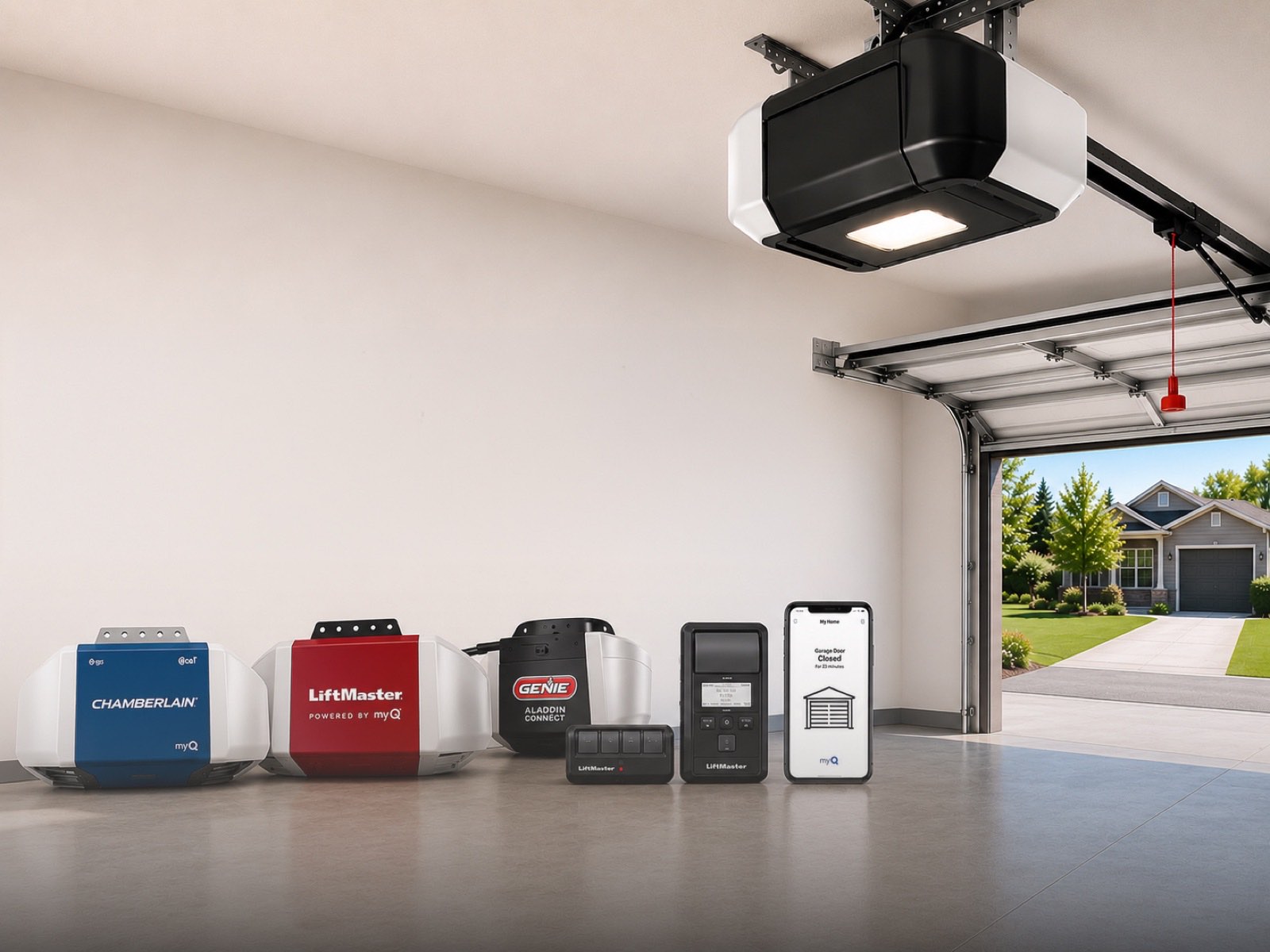
Both styles automate well; roller doors use a compact drum motor while sectional doors use a rail-mounted opener. Modern openers for either style include rolling-code remotes and smartphone control. Our opener guide covers the options.
The quick verdict
- Choose sectional if street appeal, insulation or a quiet smooth action matter most, and your ceiling can take tracks.
- Choose roller if budget, low headroom or a clear ceiling are the priority, or for side and rear garages where looks matter less.
Unsure which suits your garage? We will measure and recommend honestly during a free on-site inspection, anywhere across Sydney.
Side-by-side comparison
Everything above condensed into one view. Read it column by column against your own garage: the rows that matter most to you decide the winner, not the total score.
| Sectional | Roller | |
|---|---|---|
| Space needed | Ceiling tracks plus headroom | Compact coil above the opening only |
| Street appeal | Wide choice of profiles, colours and timber looks | Neat but utilitarian corrugated steel |
| Insulation | Insulated panels available | Limited by the coiling design |
| Noise | Quiet on nylon rollers | More metal-on-metal contact, louder with age |
| Typical installed price | $1,800 – $4,500 | $900 – $2,500 |
| Automation | Rail-mounted opener, belt or chain drive | Compact drum motor beside the curtain |
Which door suits which Sydney home
- New builds and renovated facades. Across the Hills District, in suburbs like Castle Hill and Rouse Hill, the garage door is a big share of the frontage, and sectional doors in matching Colorbond or timber-look finishes are the near-universal choice.
- Older brick garages. Many established Sydney garages were built with low ceilings and shallow headroom. A roller door's compact coil often fits where sectional tracks simply cannot.
- Garages doubling as storage or workshops. If the ceiling carries racks, kayaks or a mezzanine, the roller door keeps it completely clear.
- Garages under bedrooms. An insulated sectional door with a belt-drive opener is the quietest combination we install; our opener guide explains why.
- Coastal homes. Both styles handle beachside suburbs like Manly and the Northern Beaches when finished and maintained properly, but salt air punishes neglected hardware on either, so factor in annual servicing near the water.
Running costs over the door's life
Purchase price is only part of the picture across a 20-year lifespan. Both styles want a professional service every 12 to 18 months, and both wear the same consumables: springs rated around 10,000 cycles and an opener that typically lasts ten to fifteen years. The practical differences are smaller but real. A damaged sectional panel can often be replaced individually, while damage to a roller curtain usually means replacing the whole curtain. Roller doors, with fewer hinges and rollers, have slightly fewer parts to wear. In practice, the habits in our maintenance guide matter more to lifetime cost than which style you pick.
One last point on resale: for a front-facing garage, a tired door drags the whole facade down, and a new sectional door is one of the simpler upgrades that photographs well in a listing. For a rear or side garage nobody sees from the street, that argument disappears and the roller door's price advantage stands. If you are still torn after all of this, measure nothing and decide nothing yet; the headroom, side room and track clearances are what actually rule options in or out, and we check all three during the free inspection before recommending either style.
Frequently asked questions
Which door lasts longer?
Both last 20 years or more when serviced regularly. Springs and motors are the parts that wear, and both are replaceable on either style.
Can a roller door be insulated?
Insulated roller curtains exist, but the insulation is thinner than a sectional panel. If thermal or sound insulation is a priority, sectional is the better platform.
Can you replace a roller door with a sectional?
Usually yes, provided there is headroom and side room for tracks. We check this during the free inspection and confirm before you commit.